
How to Get Indian Followers on Instagram 2026
How to Get Indian Followers on Instagram
So, how can you get Indian followers on Instagram?
The best approach is to combine useful content, a strong Instagram profile, Reels, relevant hashtags, audience engagement, creator collaborations, and targeted promotion. In addition, your content should match the interests of your target audience in India.
If you want to learn more about building an India-focused audience, you can also read our guide on real Indian followers on Instagram.
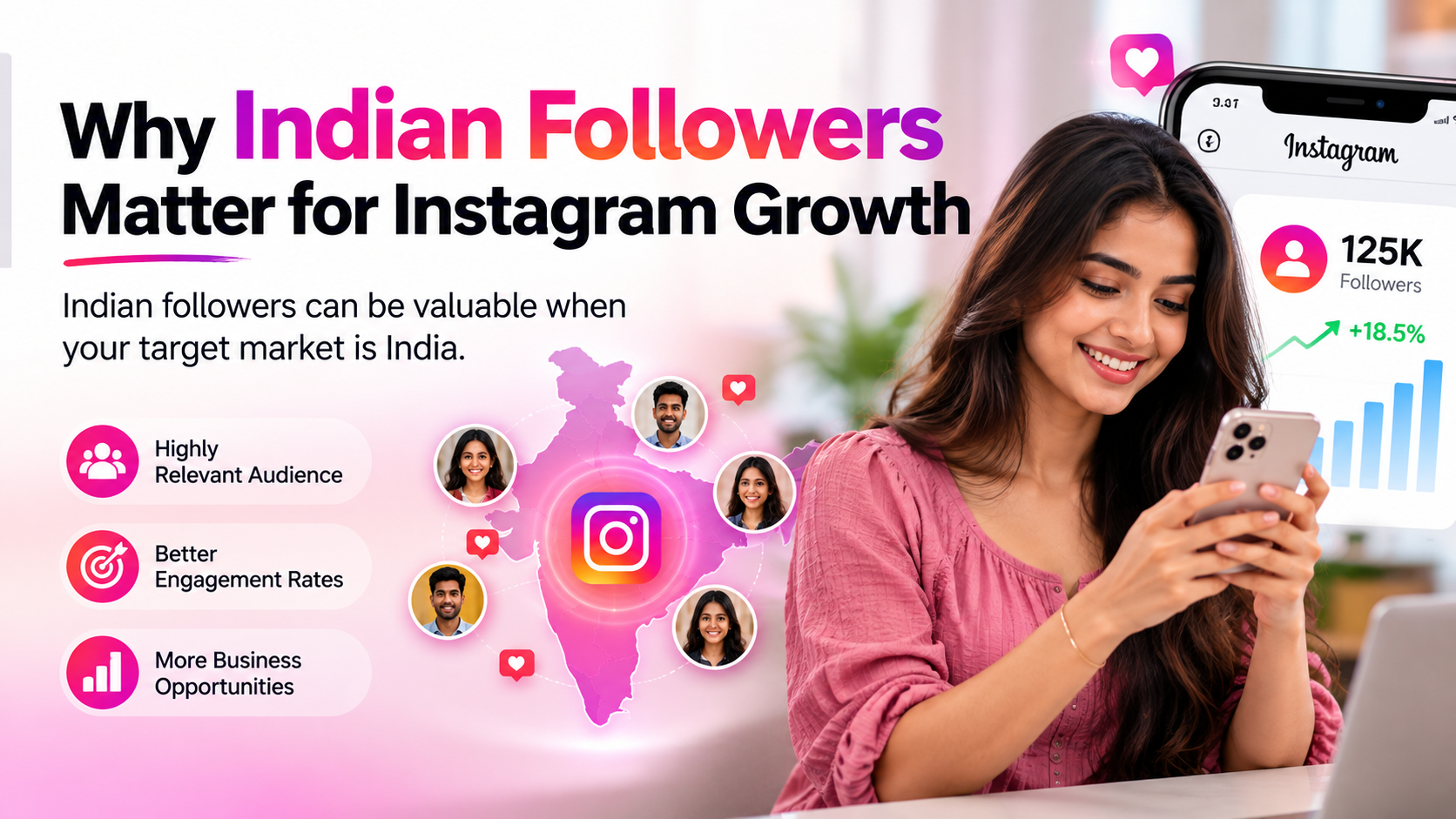
Why Indian Followers Matter for Instagram Growth
Indian followers can be valuable when your target market is India.
For example, a Jaipur clothing store needs people interested in fashion and shopping. Similarly, an Indian beauty creator needs an audience interested in makeup, skincare, and beauty tips.
Therefore, your follower count should not be the only goal.
Instead, focus on attracting people who are interested in your:
- Niche
- Products
- Services
- Location
- Content
- Industry
- Brand
A smaller audience with strong engagement can often be more useful than a large audience with little interest in your content.
For this reason, define your target audience before you start your Instagram growth campaign.
How to Target Indian Audience on Instagram
Define Your Target Audience
First, decide who you want to attract.
Think about the following points:
- Age group
- Location
- Interests
- Language
- Profession
- Buying needs
- Content preferences
For example, a fitness creator may target Indian users interested in workouts and healthy living. A local salon may focus on people living in its service area.
This clear approach makes content planning much easier.
Use the Right Language
India has many languages and different types of audiences. Therefore, language selection should depend on your target users.
You can use:
- English
- Hindi
- Hinglish
- Bengali
- Marathi
- Gujarati
- Tamil
- Telugu
- Kannada
For example, a Hindi-speaking audience may respond better to simple Hindi or Hinglish content. Meanwhile, a professional business audience may prefer English.
You do not need to use several languages in every post. Instead, choose the language that feels natural to your audience.
Add Indian Context to Your Content
Indian users often connect better with content that feels relevant to their daily lives.
For example, you can create content around:
- Indian festivals
- Local events
- Regional food
- Indian fashion
- Local businesses
- Popular topics
- City-based trends
- Common customer problems
However, use these topics only when they fit your niche.
As a result, your content will feel more natural instead of looking like generic content with an India hashtag.
Optimize Your Instagram Profile
Getting profile visits is only one part of Instagram growth.
Next, you need to turn those visitors into followers.
Start by checking your:
- Profile picture
- Username
- Name field
- Bio
- Highlights
- Pinned posts
- Recent content
- Call to action
Your profile should quickly answer three questions:
Who are you?
What do you offer?
Why should people follow you?
If your profile looks confusing, visitors may leave without following.
Therefore, profile optimization should be part of your Instagram growth plan.
If your profile needs a complete improvement, you can explore our Instagram profile revamp service for influencers and creators in India.
How to Get Indian Followers Organically
Organic growth takes time. However, it can help you build a more relevant and engaged audience.
Create Content for Indian Users
Do not create general content and simply add Indian hashtags.
Instead, create content for the people you want to attract.
For example:
A fashion creator can share Indian outfit ideas.
A food creator can cover regional dishes.
A fitness creator can share simple workout tips.
A local business can answer common customer questions.
An education page can explain topics that matter to Indian students.
In each case, the content should solve a real problem or provide useful information.
As a result, users have a stronger reason to follow your account.
Use Instagram Reels
Reels can help you reach people who do not already follow your account.
Therefore, Reels should be part of your content strategy when they fit your niche.
You can create:
- Quick tips
- Tutorials
- Product demonstrations
- Before-and-after videos
- Educational videos
- Behind-the-scenes content
- Short stories
- Problem-and-solution videos
- Local recommendations
- Industry tips
Most importantly, make the opening clear and interesting.
For example, instead of starting with a long introduction, begin with the main problem or benefit.
A simple opening such as “3 mistakes that reduce your Instagram reach” gives users a clear reason to keep watching.
Use Relevant Hashtags
Hashtags can help Instagram understand what your content is about.
However, adding random popular hashtags is not a strong strategy.
Instead, use hashtags related to:
- Your niche
- Your topic
- Your location
- Your industry
- Your audience
For example, a Jaipur fashion business can use relevant fashion and Jaipur-based hashtags when they genuinely match the post.
Therefore, always choose relevance over quantity.
Use Location-Based Content
Location can be especially useful for local businesses.
For example, a business in Jaipur can create content about:
- Jaipur customers
- Local events
- Local shopping
- Nearby areas
- City trends
- Local services
This approach can help your content connect with people who are more likely to become customers.
Similarly, businesses in Delhi, Mumbai, Bengaluru, Ahmedabad, or other Indian cities can build content around their local audience.
Engage With Relevant Indian Accounts
Instagram growth is not only about publishing posts.
You should also interact with people in your niche.
For example:
- Reply to comments
- Answer questions
- Respond to Stories
- Join relevant conversations
- Engage with creators
- Follow relevant industry accounts
- Build creator relationships
However, avoid spam comments such as “Follow me” or “Nice post.”
Instead, add something useful to the conversation.
Over time, this can help people recognize your account and visit your profile.
Collaborate With Indian Creators
Creator collaborations can introduce your account to a new audience.
First, find creators whose audience matches your niche.
Then, consider formats such as:
- Instagram Collab posts
- Reels
- Interviews
- Live sessions
- Tutorials
- Product demonstrations
- Expert discussions
The biggest creator is not always the best choice.
For example, a smaller creator with a highly relevant audience may provide better results than a large creator with an unrelated audience.
Therefore, focus on audience relevance instead of follower count alone.
How to Increase Instagram Followers in India
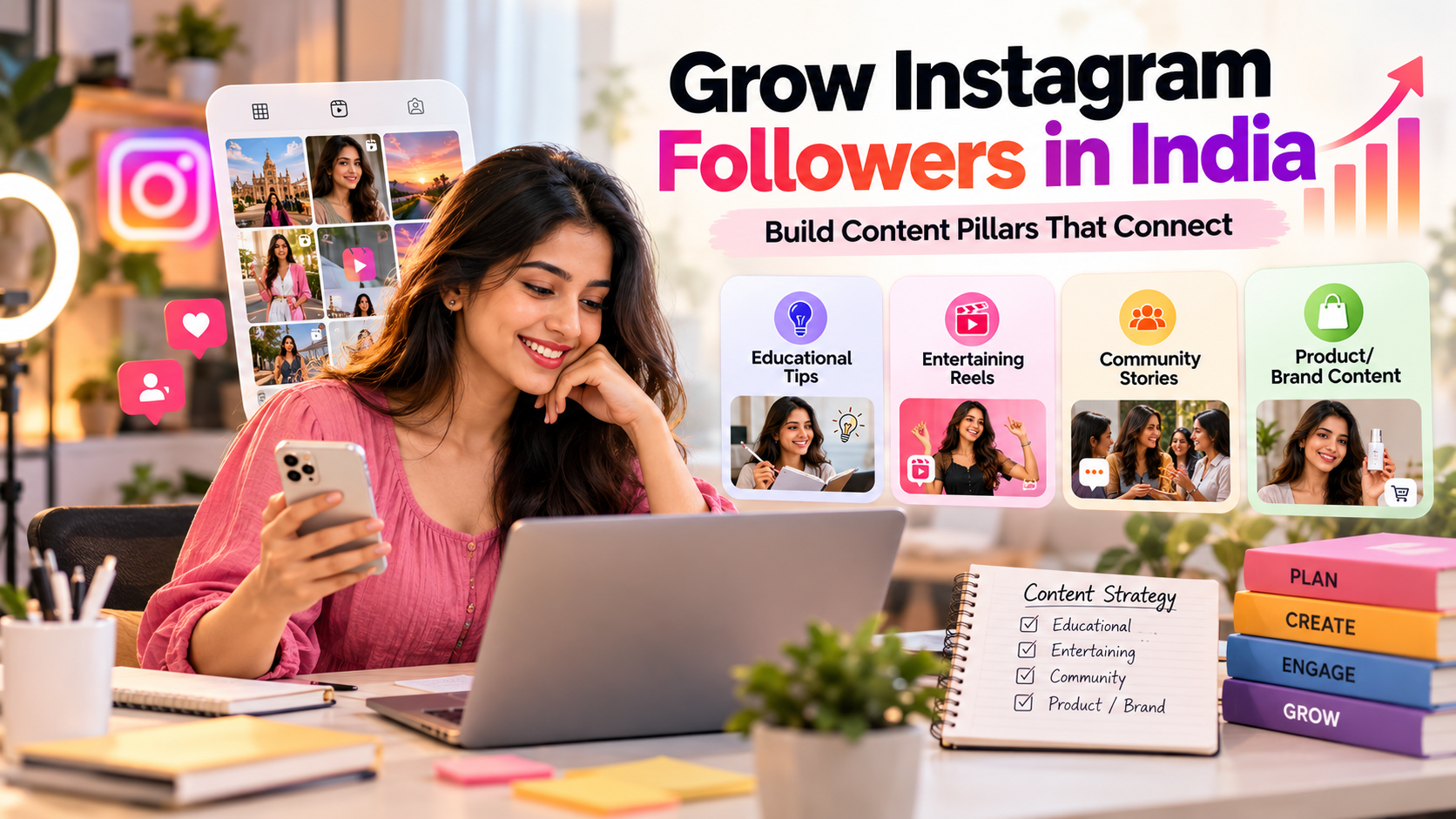
Create Content Pillars
Posting random topics can make your account difficult to understand.
Instead, create a few content pillars.
For example:
Educational Content:
Tips, guides, tutorials, and useful information.
Engagement Content:
Questions, opinions, polls, and community posts.
Product Content:
Products, services, features, and demonstrations.
Entertainment Content:
Relatable posts, trends, stories, and niche-based entertainment.
This structure makes content planning easier.
In addition, it helps your audience understand what they can expect from your account.
Improve Profile Conversion
Sometimes the problem is not reach.
Instead, the problem is profile conversion.
Suppose 1,000 people visit your profile but only a few follow. In that case, review your profile before spending more money on promotion.
Check:
- Is your bio clear?
- Is your profile photo professional?
- Are your best posts pinned?
- Is your niche easy to understand?
- Does your profile show your value?
- Is there a clear reason to follow?
A strong profile can turn more visitors into followers.
Study Instagram Insights
Do not judge your Instagram growth only by follower count.
Instead, review your account performance regularly.
Important metrics include:
- Reach
- Views
- Engagement
- Shares
- Saves
- Profile visits
- Follows
- Audience information
For example, one Reel may get many views but very few followers. Another Reel may receive fewer views but bring highly relevant followers.
Therefore, do not automatically assume that the Reel with the highest views is the best content.
Look at the quality of the audience it attracts.
Encourage Followers to Share Your Content
Your existing audience can help you reach new people.
Create content that people want to share with friends or family.
Useful formats include:
- Tips
- Checklists
- Tutorials
- Relatable posts
- Useful facts
- Local recommendations
- Problem-solving content
As more people share your content, your account can receive additional exposure.
Instagram Promotion for Indian Audience
Organic growth is important. However, paid promotion can also help when you want to reach a specific audience.
Organic Instagram Promotion
Organic promotion can include:
- Creator collaborations
- Community engagement
- Story promotion
- Content sharing
- Cross-platform promotion
- Relevant partnerships
This method takes time. However, it can help you build a stronger connection with your audience.
Paid Instagram Promotion
Paid Instagram promotion allows businesses and creators to reach selected audiences.
Depending on your campaign, you can focus on factors such as:
- Location
- Audience interests
- Demographics
- Content
- Business goals
For example, an Indian clothing brand may promote content to people interested in fashion and online shopping.
Similarly, a local business can focus on people within its service area.
The goal should not be to get random followers.
Instead, the goal should be to reach people who are genuinely interested in your content or offer.
If you are looking for professional support, you can explore an Instagram promotion agency in India.
Instagram Growth Services for Indian Audiences
Instagram growth services can support your overall promotion strategy.
However, you should understand what a service actually provides before choosing one.
Check:
- Promotion method
- Audience targeting
- Service terms
- Support
- Account safety
- Expected results
- Refund policy
Also, avoid services that promise unrealistic results.
A growth service should support your content strategy. It should not replace quality content.
Growinstaa provides Instagram growth solutions for creators, influencers, and businesses looking to improve their Instagram presence.
You can also explore the available Instagram growth packages to understand the different growth options.
Tips for Indian Instagram Audience Growth
If you want to build a strong Indian Instagram audience, follow these simple practices.
1. Choose a Clear Niche
First, decide what your account is about.
A clear niche makes it easier for users to understand why they should follow you.
2. Know Your Audience
Next, identify your ideal follower.
Understand their interests, problems, location, and content preferences.
3. Create Useful Content
Give people a reason to follow your account.
Share information, entertainment, education, inspiration, or solutions.
4. Use Reels
Reels can help you reach new users.
Therefore, include them in your content plan when they suit your niche.
5. Use Relevant Hashtags
Choose hashtags that describe your content.
Avoid unrelated hashtags simply because they are popular.
6. Build Creator Relationships
Connect with creators who have a similar audience.
Over time, these relationships can lead to useful collaborations.
7. Engage With Your Audience
Reply to comments and messages.
Also, participate in relevant conversations.
8. Track Your Results
Review your Instagram Insights regularly.
Then, create more content around the topics that attract the right audience.
9. Improve Your Profile
Your profile should clearly explain who you are and what you offer.
10. Focus on Quality
Finally, do not let follower count become your only goal.
A relevant and engaged audience is much more valuable.
Instagram Growth for Indian Small Businesses
Instagram can be a useful platform for Indian small businesses.
For example, salons, restaurants, gyms, clothing stores, coaching institutes, real estate businesses, and local service providers can use Instagram to build awareness.
The content can answer common customer questions.
It can also show products, services, customer experiences, tutorials, and behind-the-scenes activities.
For more ideas, check our guide on Instagram growth tips for small businesses in India.
For a local business, the customer journey can look like this:
Content → Profile Visit → Follow → Engagement → Inquiry → Customer
Therefore, follower growth should connect with a real business goal.
Instagram Promotion in Jaipur
If your business is specifically targeting Jaipur, your strategy should include local content and audience targeting.
For example, you can focus on:
- Jaipur-based users
- Local trends
- Jaipur creators
- Local businesses
- City-based content
- Relevant local hashtags
This approach can be more useful than trying to target all of India.
If Jaipur is your target market, you can also explore Instagram promotion services in Jaipur.
Common Mistakes to Avoid
Growing an Instagram account can become difficult when the strategy focuses only on numbers.
Therefore, avoid these common mistakes.
Buying Irrelevant Followers
A high follower count does not automatically mean a successful account.
If followers are not interested in your content, engagement may remain low.
Using Random Hashtags
Do not add hashtags simply because they are popular.
Use hashtags that match your content and audience.
Copying Other Creators
Trends can help with content ideas.
However, copying another creator’s content does not build a unique brand.
Add your own ideas, examples, and personality.
Changing Your Niche Too Often
If your account changes topics every few days, users may not understand what the account offers.
Therefore, keep your main niche clear.
Posting Only Promotional Content
People do not follow accounts just to see advertisements.
Instead, balance promotional posts with useful and entertaining content.
Ignoring Existing Followers
Your existing audience can help you reach new people.
So, reply to comments, answer questions, and encourage useful conversations.
How to Measure the Quality of Indian Followers
Follower count is only one part of Instagram growth.
You should also review:
- Engagement
- Shares
- Saves
- Reel views
- Profile visits
- Story interactions
- Direct messages
- Website visits
- Leads
- Sales
For creators, a valuable follower may regularly watch and engage with content.
For businesses, a valuable follower may become a customer.
Therefore, the meaning of a “good follower” depends on your goal.
How to Get Indian Followers Without Losing Audience Quality
Fast growth can look attractive.
However, fast growth is not always useful if the audience is irrelevant.
A better strategy combines four areas.
1. Content
Create useful and original content for a specific Indian audience.
2. Discovery
Use Reels, hashtags, collaborations, and relevant content formats.
3. Engagement
Build real relationships with your audience.
4. Promotion
Use paid promotion or professional services when they support a clear objective.
As a result, your Instagram strategy becomes more balanced.
Frequently Asked Questions
How can I get Indian followers on Instagram?
You can get Indian followers by creating relevant content, optimizing your profile, using suitable hashtags, engaging with Indian audiences, collaborating with relevant creators, and using targeted Instagram promotion.
How can I attract real Indian followers?
Focus on your target audience first. Then create useful content around their interests and problems. You can also use Indian languages, local topics, Reels, creator collaborations, and relevant promotion.
Which content works well for Indian Instagram users?
Educational content, tutorials, Reels, local content, product demonstrations, entertainment, and niche-specific posts can work well. However, the best content depends on your audience and industry.
Can Reels help me get Indian followers?
Yes. Reels can help your content reach users who do not already follow you. However, the content should be relevant and engaging enough to encourage viewers to visit your profile.
Should I use Indian hashtags?
You can use Indian and location-based hashtags when they are relevant to your content. However, hashtags should support your overall strategy rather than become the only way you try to get followers.
Conclusion
Learning how to get Indian followers on Instagram is not simply about increasing the number shown on your profile.
Instead, focus on building a relevant Indian audience.
Start with a clear niche and define your target users. Then optimize your profile and create content that matches their interests. Use Reels, relevant hashtags, local content, and creator collaborations to improve discovery.
In addition, engage with your audience and review your Instagram Insights regularly.
If you want faster visibility, targeted Instagram promotion or a professional growth service can support your strategy. However, these methods should work together with useful and original content.