
Organic Growth vs. Paid Growth: Which One Actually Grows Your Social Media Faster?
If you’ve spent any time trying to grow a social media account, you’ve probably asked yourself the same question every creator, brand, and marketer eventually asks: should I grow organically, or should I use paid tools to speed things up?
It’s not a simple either/or answer. Organic growth and paid growth solve different problems, move at different speeds, and work best when used together rather than as competing strategies. In this post, we’ll break down how each approach works, where an SMM panel fits into the picture, and how to decide which mix is right for your goals, whether you’re building a personal brand, running a business page, or managing growth for clients.
What Is Organic Growth?
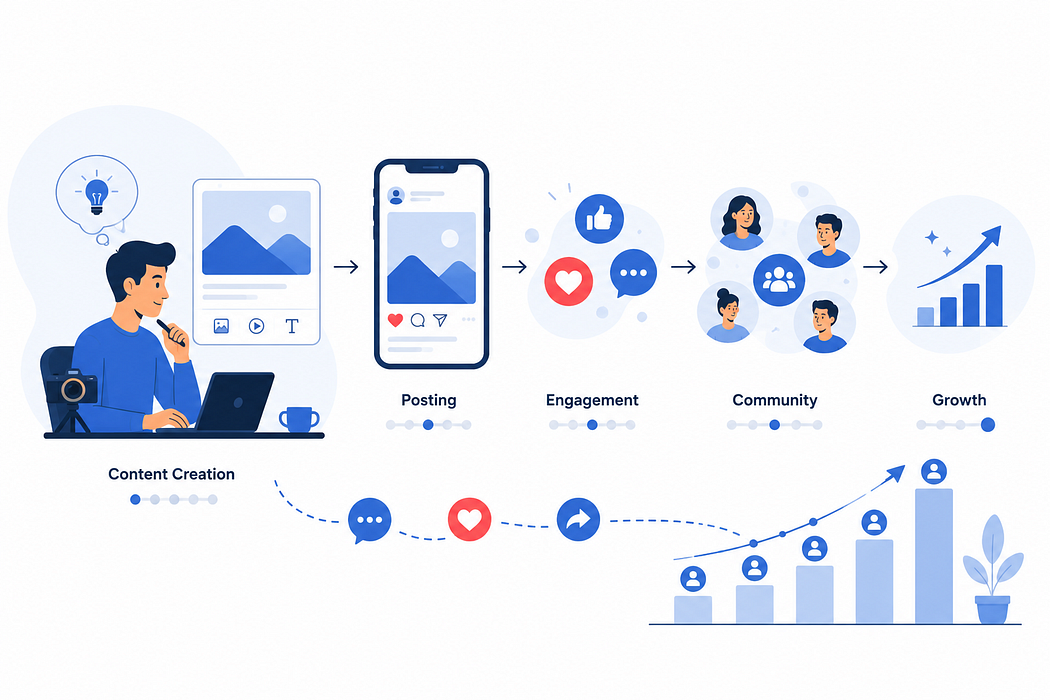
Organic growth is the slow, steady way of building an audience through content, consistency, engagement, hashtags, and algorithm-driven discovery. No money changes hands to boost numbers directly. Instead, your reach depends entirely on how well your content performs and how the platform decides to distribute it.
The advantages:
- Followers who found you naturally tend to be genuinely interested in what you post
- Engagement is real and platform-verified
- It builds long-term trust and brand credibility
- It’s free, aside from the time and effort invested
The downsides:
- It’s slow; building a meaningful following this way can take months or years
- It’s heavily dependent on algorithm changes, which can tank your reach overnight
- Competing against accounts with paid boosts or established audiences is difficult when you’re starting from zero
- Consistency has to be maintained constantly, with no guarantee of results
For new accounts especially, this route can feel like shouting into a void. You post consistently, follow every best practice, and still see minimal traction because most platforms favor accounts that already show signs of momentum.
What Is Paid Growth?
Paid growth covers a wide range of methods: running ads, boosting posts, influencer partnerships, and using tools like an SMM panel to purchase likes, followers, views, or watch time directly.
An SMM panel is essentially a marketplace where you can buy specific engagement metrics, followers, likes, comments, and views for a set price, delivered to your account or a specific post. It’s become one of the fastest ways for creators, businesses, and agencies to jumpstart the visibility of a new or underperforming profile.
The advantages:
- Results move within hours instead of months
- Helps new accounts overcome the “empty room” problem, where a low follower count discourages real users from engaging in the first place
- Useful for building initial social proof before running ad campaigns or partnerships
- Available across nearly every platform, so you can put budget exactly where your audience is
The downsides:
- Purchased engagement doesn’t always translate to real interaction or sales
- Leaning on paid numbers without an organic strategy behind them can create a following that looks good but doesn’t actually engage
- Platforms occasionally crack down on inauthentic activity, so the quality of the provider matters
This is where choosing among the best SMM panels becomes important. Not all of them are created equal, and the gap between a reliable provider and a low-quality one can affect how natural your growth actually looks.
Organic vs. Paid: Side-by-Side Comparison
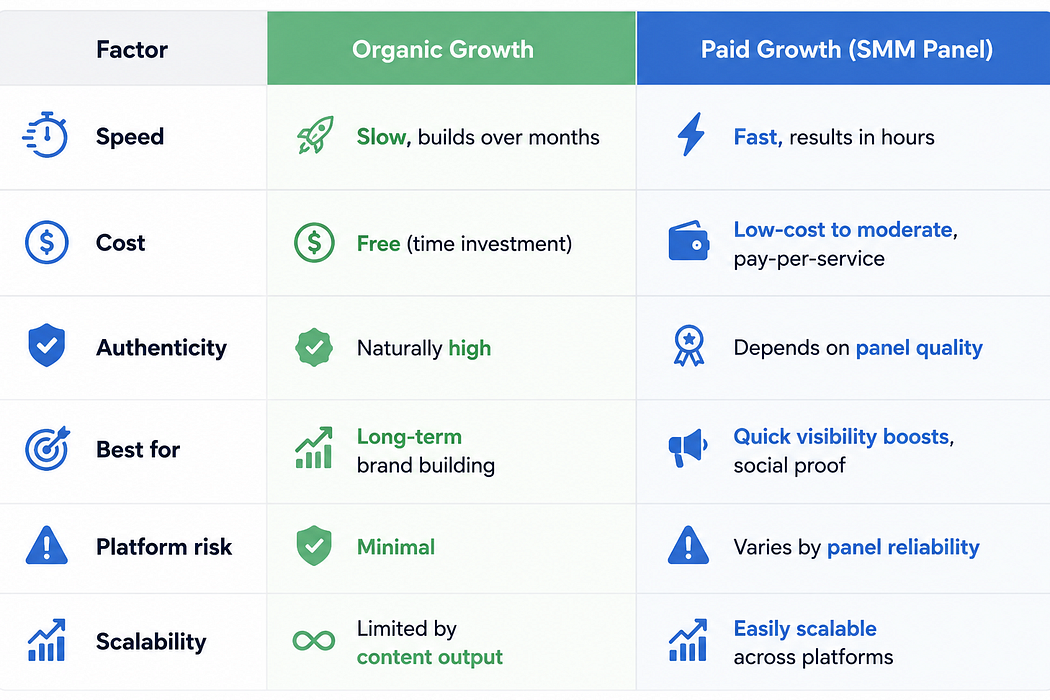
Factor Organic Growth Paid Growth (SMM Panel) Speed Slow, builds over months Fast, results in hours Cost-free, but time-intensive Low-cost to moderate, pay-per-service Authenticity Naturally high Depends on provider quality Best for Long-term brand building Quick visibility boosts, social proof Platform risk: Minimal Varies by provider reliability Scalability Limited by content output Easily scalable across platforms
Neither approach is inherently “better”; they solve different problems at different stages of growth.
Matching the Right Panel to Each Platform
Different networks reward different kinds of engagement, which is why creators typically look for a provider built around a specific platform rather than a generic, one-size-fits-all service.

Competition for organic reach is especially steep here, which is why so many creators lean on an Instagram SMM panel to build up followers, likes, or story views. A stronger follower count can shape how the algorithm treats a profile, since Instagram tends to favor accounts that already show engagement momentum, making an Instagram followers panel a common starting point for new pages.
YouTube
YouTube weighs watch time heavily when deciding what to recommend. A YouTube SMM panel that specifically offers watch-time services can help a new channel get past that initial visibility hurdle, since both watch time and subscriber count influence whether the platform starts surfacing your videos to a wider audience.
For business pages, a Facebook panel can help establish initial page likes and post engagement, which matters for credibility, since a page with almost no activity can look inactive or untrustworthy even when the content itself is solid.
X (Twitter)
On a fast-moving platform like X(Twitter), boosting visibility during a time-sensitive campaign, launch, or trending conversation is often where a panel earns its keep, since organic reach alone rarely moves fast enough to catch the wave in time.
TikTok
TikTok’s discovery algorithm is famously unpredictable, and a TikTok SMM panel-focused provider is often used to give a new video an early push in views and likes, which can influence whether the algorithm decides to send it further into the For You feed.
Finding a Budget-Friendly Panel Without Sacrificing Quality
Budget matters, especially for creators, small businesses, and agencies juggling multiple client accounts. Searching for the cheapest option is a natural starting point, but price shouldn’t be the only factor in the decision.
A few things worth checking before choosing a provider:
- Delivery speed — how quickly engagement starts appearing after an order
- Retention — whether followers and likes stick around or drop off within days
- Platform coverage — whether one dashboard covers Instagram, YouTube, Facebook, X, and TikTok
- Reputation — what other users are actually reporting about reliability
The lowest price isn’t always the best value if the engagement it delivers disappears within a week. A slightly more expensive provider with strong retention usually ends up being the smarter long-term investment.
The Case for Combining Both Strategies
The most effective growth strategy rarely relies on one approach alone; it blends both.
A common sequence looks like this:
- Use a panel to establish initial social proof followers, likes, views
- Keep posting high-quality, consistent content to hold the algorithm’s attention
- Layer in paid boosts strategically around key launches or campaigns
- Let organic engagement build naturally on top of that initial momentum
This combination solves the core problem new accounts face: both the algorithm and real users tend to favor profiles that already look established. Paid engagement can provide that initial credibility, while consistent organic content keeps the account genuinely growing afterward.
Final Thoughts
Organic growth builds trust and long-term engagement, but it’s slow and unpredictable on its own. Paid growth through a reliable SMM panel can accelerate visibility and give new accounts the push they need to compete, but it works best as a support strategy, not a replacement for genuine content and consistency.
Whatever platform you’re focused on Instagram, YouTube, Facebook, X, or TikTok the goal stays the same: find a provider with reliable delivery and solid retention and use it to complement your organic strategy rather than substitute for it.
The accounts that grow fastest and stay strong long-term are usually the ones that understand both sides of this equation, instead of betting everything on just one.
Frequently Asked Questions (FAQ)
- Is an SMM panel safe to use for growing social media accounts?
Safety depends entirely on the provider. A reliable SMM panel delivers engagement gradually and uses methods that don’t violate platform terms of service, while low-quality panels can trigger spam flags or deliver followers that disappear within days. Checking reviews and starting with a small order before committing to a larger one is the safest way to test a new provider. - What is the difference between organic growth and an SMM panel?
Organic growth comes from real users discovering and engaging with your content naturally, with no payment involved, while an SMM panel is a paid service that delivers a specific number of followers, likes, or views directly to an account. Organic growth tends to build more genuine engagement over time, while a panel provides an immediate boost in visible numbers. - Which SMM panel is best for beginners on a budget?
The best starting option for beginners is usually a panel that offers small trial orders, clear pricing per platform, and visible reviews from other users rather than automatically choosing the cheapest SMM panel available. Testing a small order first helps confirm delivery speed and retention before spending more. - Do SMM panel followers and likes actually help the algorithm?
A higher follower or engagement count can influence how platforms like Instagram and YouTube initially treat a new account, since most algorithms favor profiles that already show signs of activity. However, the algorithm also weighs ongoing engagement and content quality, so paid numbers alone won’t sustain long-term reach without consistent posting behind them. - Can you combine organic growth with an SMM panel?
Yes, and it’s actually the most common approach; creators often use an SMM panel to build initial social proof, then rely on consistent content and organic engagement to sustain and grow that momentum over time. Using paid growth alone, without an organic strategy behind it, tends to produce numbers that don’t convert into real engagement.